
















How Our Material Science Capabilities Are Shaping the Future of Mobility
- Copy

Mobility is a space where Aditya Birla Group has always held the pole position.
But new age mobility calls for capabilities not just in manufacturing but more importantly, material science.
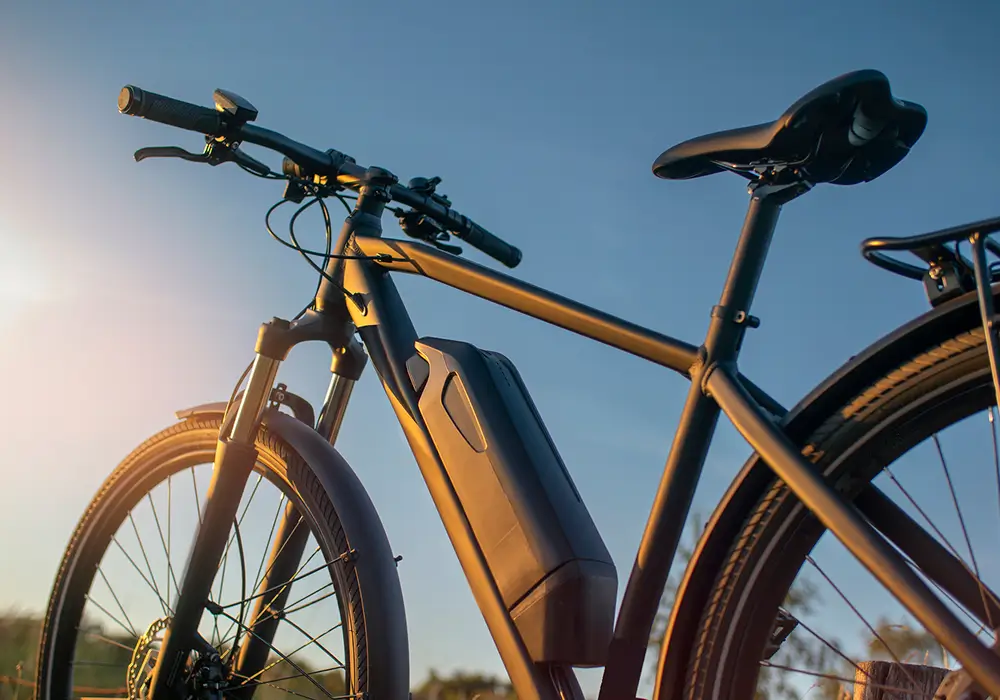
In the latest development, Hindalco has launched a new line of components addressing high-end cycling solutions which require the precise balance of speed, strength and sustainability. As e-bikes and urban cargo transform personal transport, Hindalco’s capabilities in precision aluminium engineering are solving the age-old conflict between strength and weight.
Precision Pedalling
For as long as bicycles have existed, engineers have chased the same objective: remove weight without compromising strength. It is a pursuit measured not in dramatic reinventions but in careful refinement. A lighter frame climbs more easily, responds more precisely and demands less effort from its rider. Every unnecessary gram has long been treated as something to be designed away.
And yet, bicycles are becoming more demanding than ever. What was once a simple mechanical machine into a sophisticated mobility platform. Motors, batteries, integrated electronics and cargo-carrying capabilities have transformed the urban cycling experience.
This is where material science begins to matter.
The Material Behind the Movement
Lighter alloys, advanced manufacturing processes and precision engineering have become integral to modern bicycle design. As bicycles diversified into commuter bikes, cargo bikes, gravel bikes and electrically assisted bicycles, the demands placed on the frame began to change. Designers had to reduce weight, improve corrosion resistance and accommodate increasingly sophisticated components, all while preserving the strength and ride quality that cyclists expected.
Aluminium proved well suited to that shift. Its strength-to-weight ratio allows manufacturers to reduce weight without sacrificing structural integrity. It resists corrosion, lends itself to complex frame designs through advanced forming techniques, and can be engineered to accommodate batteries, motors and integrated cable routing. It is also infinitely recyclable, allowing the material to remain in use across multiple product lifecycles.
Where Engineering Meets Opportunity
As bicycle design has become more sophisticated, so too has the process of building one. Material selection, alloy development, forming technologies and precision manufacturing now influence how a bicycle performs every bit as much as its geometry or components.
For Hindalco, Aditya Birla Group's metals flagship, the modern bicycle draws upon capabilities developed over decades across the aluminium value chain. The company's recently launched bicycle and e-bike business brings together materials science, engineering and manufacturing to produce frames, rigid forks, handlebars and wheel rims for applications ranging from commuter bicycles and folding bikes to mountain bikes, cargo bikes and high-performance e-bikes.
Engineering for Consistency
Building a bicycle component begins long before metal is shaped into its final form.
- The choice of alloy determines how a frame responds to repeated stress, how easily it can be welded and how much weight can be removed without affecting durability.
- Forming processes influence tube geometry and stiffness.
- Heat treatment restores strength after fabrication. Every stage contributes to how the finished bicycle performs on the road.
Hindalco's manufacturing process brings these capabilities together through alloy development, extrusion, hydroforming, robotic welding, machining, heat treatment and testing.
The objective is consistency. Bicycle manufacturers expect every frame and component to perform identically across production runs, often at volumes running into thousands of units. Small variations in dimensions, weld quality or material behaviour can have significant consequences once products reach the road.
Hindalco's integrated aluminium business provides this reliability. The company combines primary aluminium production with downstream capabilities in alloying, extrusion, precision manufacturing and recycling, allowing greater control over quality, lead times and product development.
A Quieter Shift in Mobility
The future of mobility is often imagined through electric cars, autonomous vehicles and high-speed transport. Yet one of its most significant transformations is unfolding on two wheels. Cities around the world are investing in cycling infrastructure. E-bikes are making longer commutes practical for more people. Cargo bikes are finding new roles in urban logistics. Together, these changes are reshaping expectations of what a bicycle can do.
The bicycle itself may still look reassuringly familiar. The material science and engineering hat powers it tell a very new story.