

















Work-Life Balance, Authentic Leadership, and Tough Choices
- Copy

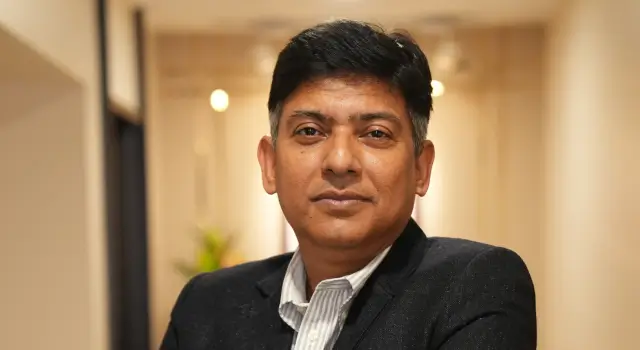
In this episode, Satyaki Ghosh, CEO – Cellulosic Fashion Yarn at Grasim Industries, reflects on why planning is the foundation of true work-life balance—not just for leaders, but for their teams too. He shares the tough decision to sponsor cricket over his beloved Arsenal, highlighting how context shapes business choices. Ghosh also explains why authenticity is non-negotiable for leaders and employees alike, and offers candid advice to his future self: when you have the time and means, don’t forget to enjoy life.
00:00 – Planning holidays around football matches
Satyaki Ghosh: I built my holiday plan much in advance so that my boss knows and my team knows when I'm not there. If choice is given to me, I would like to enjoy a bit more while I still care.
Brian: Satyaki, you once said you'd travel anywhere in the world for an Arsenal match.
Satyaki Ghosh: That's true.
Brian: I know I'm touching a really soft spot — and still make it to the office the next day, which is a tall statement. Now honestly speaking, have you ever scheduled a work trip conveniently around a match?
Satyaki Ghosh: So the first answer is capital no. I've never done it. And I'm honest about it. I've never done it. But what I've done is for Champions League matches, which are on Saturday, I've worked the Friday, taken an evening flight, reached that European destination, watched the Saturday match, flown Sunday morning, come back Sunday night and Monday gone back to office.
Nobody needs to know that I was in Europe the weekend and I watched a match. This I have done. This is saying coming back the next day because the matches are in the evening. You actually can — you need the Sunday in between — but if the match is on a Saturday, I've done it to UK and to European destinations — Spain, Italy, etc. Two, three times I've done it.
01:35 – Travel stories and matchday serendipity
Now I've never put a tour meeting around it. I've never done it because I think, you know, when you talk about absolute integrity, I think that's borderline. But I have watched matches in my holidays and on my official tours. Give you example — I was in Norway and we were walking down the streets, me and my wife, and suddenly I saw a lot of Scotsmen everywhere in their kilts, drinking beer in the Irish pubs, Scottish pubs, and singing. And I said, what is happening? Why are there so many Scots in Norway? Check if there's any football match.
Now it was summer, the league season, etc. were over. I said, this is quiet season. But then I looked at internet and I saw there's a Euro match between Norway and Scotland the next day evening. So I sat in a cafe, took Wi-Fi, I bought a ticket. Next day, my wife shopped alone. I figured out where the stadium is. I went and watched Norway versus Scotland because Norway, you know, Arsenal's captain Odegaard is Norway's captain. And Erling Haaland, who's the biggest goal scorer, is Norway's player. And for Scotland, my dear Kieran Tierney plays, who plays for Arsenal.
So I saw all three of them. Scotland won 2–1. The home team lost. And Odegaard is our captain — Arsenal captain and Norway captain. So I saw him up close. I love that sense of ownership. He's our captain. Yeah, Arsenal.
02:54 – Arsenal's presence in India & sponsorship insights
Brian: Does Arsenal know about this gentleman, Satyaki?
Satyaki Ghosh: Arsenal knows. When I used to work for L'Oréal, I had a lot of advertising money to sign and I had a brand called Garnier for Men. So Arsenal was coming into India to set up academy and somebody told them that this guy is a mad fan and he may sponsor. So I did two, three meetings with them. I was promised box office seats of Arsenal, Emirates Stadium at any given point in time and I should not spend so much of company's money behind it.
I might as well put it behind cricket — and I did not sign the deal — but they knew. So the next time some of Arsenal's big legendary players came to Bombay to set up, I went and had drinks with them at Monkey Bar.
04:12 – Career reflections & love for beauty and yarn
Brian: Oh man, that's a trip. I mean, I'm not an Arsenal fan, but I'm certainly a fan of their ex-coach. I mean, Arsène Wenger. Arsène Wenger to me was a team maker. You know, a champion. These players played for Arsène Wenger. They were in the team called Invincibles which won a league title — only one team ever — without losing a single match over nine months, 38 games.
Now after many series, what's the next chapter for you? I mean, leading the sustainability revolution, coaching Arsenal, or launching the world's most responsible snack or beauty product?
Satyaki Ghosh: I think amongst all this, I really loved my beauty and personal care stint somehow. I think the PepsiCo stint is also very close to my heart. But the beauty stint was — I think there was something in it which I liked — in the formulations of those beauty products, in the application, and the amount of consumer research that went into it. It somehow resonated a lot with me.
A fashion yarn business back to its glory days — that's what the group expects from me and that's the job I'm at. So I'll try to do it to the best of my abilities. I don't think I'm going in and launching a food or a personal care brand. No, it's a lot of hard work and I need some work-life balance.
05:37 – Leadership style & future NGO initiatives
But I think time is coming when I started contacting and I'll work with some NGOs and do something good for the world and for people. And that is high up on my agenda. I recently did a training program where I had a coach and I promised him that that's the next thing that I'll do. So that's something I'll do in the next five years. I'll definitely do.
07:02 – What it takes to become a true leader
Brian: You've led teams now, as we've discussed — across liquor, snacks, beauty, now textiles. I mean, if your career were a product, what would its tagline be?
You are you because you're worth it?
The best leaders inspire loyalty?
Now what's the one thing you've done that made your team say — if I might in quote — "I'd follow this guy anywhere," even into a stadium full of Arsenal fans?
Satyaki Ghosh: In corporate world, we live within a lot of politics. So when people feel that you don't have an agenda against an individual and your agenda is for the job at hand, you are playing the ball and not the man — as they say in football — that's when they really follow you. That's when I think you move from a manager to a leader.
08:26 – The value of strong defense in life & business
Brian: Finally, we've looked back over our shoulders and looked at learnings and you just now mentioned about the way forward. Let's say 10 years from now, you're sending advice to today's Satyaki. What will that be?
Satyaki Ghosh: I just think that you need to work enough. You have to work very seriously. Hard work has no substitute. But you need that much amount of money that you can spend in this life, right?
Life will inevitably come to an end and the last five, seven years are not great for enjoying. So while you have time and you have some flexibility in terms of money, I think you should enjoy life. And 10 years later, I'll have 10 years less and I'll be older. And the enjoyment needs to come now and not wait.
Brian: Okay, my final question. I mean, if you could trade places for just a day with an athlete — I didn’t say coach — with an athlete, who would it be and what’s the first thing you’d do?
Satyaki Ghosh: In football, they say attackers have the most prized commodities, right? They score goals. So they say attackers win you matches, but a great defense wins you the league — over 38 matches and over nine months. So if you don't concede, somebody or the other from your side will score. But you can't concede — you have to keep standing.
So we had this legendary — Arsenal had this legendary defender called Tony Adams, who was also Arsenal's captain, and he was a beast at the defence. You had to run through Tony Adams to get to Arsenal's goal, right? And running through Tony Adams was very difficult.
So I think that’s something that you remember — also because it loosely falls with our chairman's vision at ABG of "last man standing." You know, he really believes in last man — in industry, you have to be the last man standing. Which means you have to be the lowest cost manufacturer. When everything around you is falling, you have to be the most efficient and you have to be the last man standing.
Because if you're the last man standing, in all probability you'll win — because everybody else will die and you'll get the industry. And I think Tony Adams for me as an athlete showcased that.
09:51 – Episode wrap-up and takeaways
Brian: Wonderful. Wonderful. I must admit, I expected you to use an attacker like you said, you know, because they tend to be in the spotlight. But this is a great combination, you know, between effectiveness and still being key. Resilience is the word.
Satyaki Ghosh: That's right.
Brian: I just wish we had another episode as well to discuss.
Satyaki Ghosh: We can. We have to just ask CorpComm or whichever department is doing it.
Brian: Will you do another one?
Satyaki Ghosh: Leave that to me. Leave that to me.
Brian: But no, honestly, on a serious note — and I was serious when I said that as well — it's been an absolute privilege, Satyaki, getting your mind and your thoughts into words and sharing it with the rest of the people who will be consuming it while watching this podcast. Thank you once again for your time and for being just the wonderful, honest, outspoken person you are. Truly appreciated. Thank you. Well, what a wonderful, wonderful chat this was — and we are eternally grateful to all of you who have tuned in. And we’d be even more grateful if you could share your sentiments around what we do — so feel free to leave your comments below.
Watch full video on YouTube: Leadcast – From Kurkure to Couture | Satyaki Ghosh | Part 2