

















Resilience and the Velocity of Change
- Copy

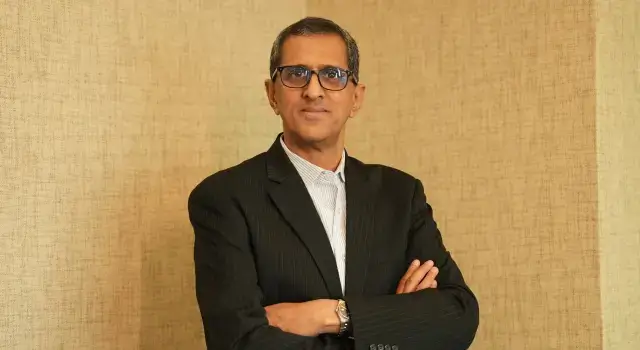
In the first episode, Ashok Ramchandran, Director – Group HR at Aditya Birla Group, reflects on how early challenges shaped his leadership journey, and how the fear of irrelevance fuels his drive to stay future-ready. He shares the importance of bringing one’s whole self to work and why two principles guide him: being prepared for opportunity and change with speed, and staying focused with authenticity—the ultimate “smell test” of leadership. Ramchandran also offers insights on navigating leadership’s highs and lows while maintaining resilience and purpose.
00:00 – Personal planning for workplace relevance
Ashok Ramchandran: If you don't have a plan for yourself, you're likely to become redundant as you go along. In your own mind, you won't feel fresh. So my own learning agility had to keep pace with what was constantly changing. And if I didn't, I would get outpaced. I would become irrelevant. Focus on being prepared. I think the future is...
01:41 – Learning agility and contextual leadership
Brian: Hello and welcome to yet another episode of Leadcast. Today we are joined by a very special guest — Ashok Ramchandran, Director, Human Resources at the Aditya Birla Group. He has over 35 years of rich and varied experience in HR, spanning multiple sectors in companies such as Asian Paints, GE Capital, Tata AIG Insurance, and Vodafone Idea — prior of course to joining the Aditya Birla Group 9 years ago.
Now, in this exclusive three-part series, we begin by reflecting on his illustrious career, then talking about the changing workplace dynamics, and what the future of work looks like for all of us.
Ashok is a strong believer in talent and potential and of course, in building opportunities for people to make an impact. So let's dive right in. Ashok, thank you so much for joining us today.
Ashok: Thank you for your time. Pleasure, Brian. I know that comes at a premium, but thanks again.
Brian: Looking back on your career spanning well over three decades, I'm going to ask you a bit of a pointed one — what were some of the toughest challenges you faced? And importantly, how did you overcome them? Any leadership lessons that have stayed with you over the years?
Ashok: I think as you span careers, as all of us navigate times and contexts, early challenges have been to first of all understand the context of the company I work in. Therefore, whatever role we are in — I was in an HR role and later in a business role — making sure what I do is relevant to the context and the pace that was needed at that time was one of the biggest challenges.
Second, as I've gone along, I've had to cope with the fact that change is going ahead of my ability to cope with it. So my own learning agility had to keep pace with what was constantly changing. And if I didn't, I would get outpaced. I would become irrelevant. So the fear of irrelevance — if you're not on the ball all the time on things that you should be — grips me and has been my dilemma and challenge as I've gone along. It keeps me awake at night, keeps me fired, keeps me energized.
I think I have used some of these as cornerstones to keep afresh, keep looking forward, being prepared for that future. That early learning, if I may call it, I suspect is true even today. It's true for me today. As I've transited over the last one year, there have been multiple times when I've had to step up to occasions, step into new things, galvanize new aspects of my own strengths and areas where I need to develop differently, and come to terms with it.
03:07 – Authentic leadership in a hybrid world
Therefore, the second aspect is: coming to terms with the person you are has been a big learning. So I can't be somebody who I'm not. So how do I — in the context of my delivery — still be myself? Quite often I found that I'm at my best when I'm fully myself. And that melody gives the best of music for the company as well.
Brian: That is so true and so well said, Ashok — that we need to be ourselves. Having said that, you'll be the first to agree with me that the way we work is evolving faster than ever. Be it hybrid models, shifting employee priorities, rising expectations... very importantly now, I mean with all of this change — is there any one leadership principle that has stood the test of time for you?
04:34 – Preparation and authenticity for future challenges
Ashok: A single leadership principle? I'll give you two. Two things which for me matter a lot, which I think will be relevant for all of us to consider:
One — be prepared. In many forums, as I go across the company, I talk about the importance and the need to be prepared. Prepared for what? Prepared for opportunities, prepared for delivery, prepared for change. Therefore, can we bring upon ourselves a certain velocity of change in terms of preparation? That readiness and preparation gives you that opportunity knock-knock. I think that's a big win.
Second — stay focused and authentic. Authenticity is a very sometimes misunderstood feature of our persona. And I think this is a smell test. You'll know who your managers are who are authentic — who are kind of "stripes on the shoulder, I'm senior" kind of a leader. You respect people who are authentic. So can each of us work on authenticity — to be ourselves and yet come through in a certain manner of preparation?
So if I'm a leader, I must exude that authenticity for my team to experience me. And by the way, my team will know me for being authentic or otherwise. That's why I call it a smell test. So if you focus on that — focus on being prepared — I think the future is yours. The two key words: authenticity and be prepared.
06:01 – Emotions and discipline in leadership
Brian: Leadership is high energy — and you'd be the first to validate that it's a high stakes game as well. Ashok, how do you personally stay energized? Easier said than done. How do you stay ahead of the curve? Any daily habits or mindsets that help you stay on top of your game?
Ashok: I suspect, Brian, nobody's on a constant high all the time. So I'm sure all of us who are together today at the podcast will vibe with me when I say: there are high days and low days. There are fantastic moments and there are moments when you wonder what's happening around you. There are fantastic bosses and there are bosses who you wonder what's happened on a particular day.
So we do navigate, on any given period of time, a multitude of journeys, sentiments, our own emotions. A second bucket: we're also influenced by who we are as people, as individuals. All of us carry our precious personal stuff into work as well. So we are a thinking, feeling human being.
07:30 – Passion for impact and team connection
If that be the reality, what keeps me energized is sometimes the focus and the discipline to complete something on time. So timeliness I use to ensure I am able to stay focused in spite of other distractions surrounding me. And the distractions could be personal, could be official. On a low day when I see things falling apart and not going as I expected — what diverts me back is possibly the discipline of timeliness.
Number one: I know that this has to be done in a particular manner. And fired up by a second important quality, which for me is a defining quality — I would like to kind of… I learned from my early bosses, and I would like to believe I emulate it in some form — is the passion to make a difference. And that's not a theoretical statement. If we keep that as a north point — that irrespective of the ups and downs of the day, the week, the month, maybe the year — if I have a passion to make a difference in spite of, right? I will make that difference.
And to me, that's the north point which fires me. And allied that with my timeliness and push for getting things done — big picture or small things — you know what? I stay focused. The level of distraction reduces to saying, "Stop that. Stay focused."
09:11 – Career resilience through personal planning
Brian: You mentioned, Ashok, authenticity. What comes through — and I have had the privilege of knowing you for a fair bit — is just being you, as you mentioned. One can feel Ashok Ramchandran beyond your designated role in the company.
Now this might be a tough one for you — but one piece of advice (and we all have this) that you wish someone had given you earlier in your leadership journey — is there that one thing that you kind of, not regret, but feel, "Had I learned this earlier, it would have augured well for me"?
Ashok: Wow, I'm tempted to give a long list — but I won’t.
I would say two aspects at this point, Brian. A simple advice I would give to all of us — more than advice, simple sharing I would do to all of us — something which I could have done earlier in my career, I would have benefited more, which I stumbled upon and learned as I went:
10:31 – Investing in personal growth and development
- Have a plan for yourself.
It is such a simple thing to do — but we don’t. Have the resilience to stick to the plan.
Why do I say that? Companies have annual plans, budgets, monthly reviews, weekly reviews, daily reviews, boss-based reviews — tons of reviews — more than what we possibly need at times. But we don’t have an individual plan for ourselves, which we hold ourselves accountable for.
If you want to take on larger roles — are we reading enough? Are we building a perspective? Am I taking on different assignments, different roles? Am I widening my thinking and impact? Or am I stuck to my pattern because I'm good at my pattern?
If you don't have a plan for yourself, you're likely to become redundant as you go along. In your own mind, you won't feel freshness. That’s the winning formula, which I learned rather late — after 7 years into my career, when my boss said, "Listen, you think you’re doing a good job. Good for you. But what further? How have you invested in yourself?"
And to my horror at that moment, I realized that I'm just running daily stuff. I had to re-recast. I think that lesson stayed with me all through. And today I do have a plan for myself. And I hope you do. And I hope all my colleagues on the podcast with me today do have a plan for themselves.
Yeah, my worry, Brian — my worry is this: all of us are very caught up in the routines and the rush of what we do. There will be days like that. But if I don’t have a plan, that is pretty much what I’m going to be doing the whole month. And the month melts into a quarter, and a year. And when I look back, I pretty much notice that I've been so busy. Now I can always tell you, "Oh, you know, it's been a busy year, I've been very busy." But the loss is mine when I don’t invest in myself.
True — my not having a plan is my loss. A plan which sets your north point clearly. A plan which says where do you want to go, what do you want to achieve — personally or professionally.
He's a holistic man.
Watch Full Video on Youtube: Leadcast | Leadership Blueprint and the Future of Work | Ashok Ramchandran | Part 1