

















Mentoring for Impact
- Copy

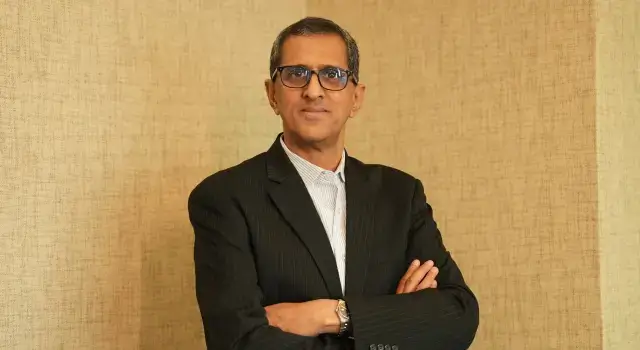
In the second part, Ashok Ramchandran, Director – Group HR at Aditya Birla Group, highlights how today’s youngsters are pivoting toward values and purpose—and why organizations must adapt. He shares his philosophy of unleashing the “power of newness” by empowering early-career professionals to learn, share, and evolve into future leaders, while drawing on the wisdom of seniors with humility and patience. Ramchandran also explains why fleeting workplace buzzwords like “quiet quitting” should be ignored, and why authentic leadership anchored in purpose is the path forward.
00:00 – Mentoring and flexibility for Gen Z
Ashok Ramchandran: As a senior you have a duty to provide and groom, and your joy is in grooming. Your joy is in your youngster succeeding, and the youngster's joy is in having been mentored by one of your best senior leaders ever. No boss is a permanent feature of your life, so don't make the current context the only case for change.
Now we spoke about leadership lessons and staying ahead. Let's get into the changing workplace because that's a fascinating piece. I mean Gen Z, I'm sure you will agree with me, is shaking things up — demanding flexibility, purpose, rapid growth, sometimes beyond reality.
Now if leaders could do just one thing differently to truly engage them, I mean, what would you recommend? So I am a believer of very practical, sensible flexibility to be adopted by our colleagues across. I'd like that to not translate necessarily into a strict policy only. And equally, I would look to all employees to use it in a responsible manner.
I think we are blessed to be in a company which respects your personal journeys and time that each of us have to do along with the work priorities. I think it's incumbent on — whether it's Gen Z or the earlier generations — to carry the joy and the responsibility of both these parts together, number one.
01:37 – Generational collaboration and shared responsibility
Number two, I see a lot of youngsters pivoting to values, purpose, asking questions of "Where does it all lead to?" And I think that's an answer the company has to find — through the line manager and the businesses finding solutions for them.
I think the larger purpose of the group has been already defined, so there is a big opportunity in our group to contribute to more than just your role. I think that's a big one I'd like all of us to harness, to be part of, to find the time and capacity to be part of. And I think therein you can make a big difference to your business through your role, also to society. I think that there is this balance which is there.
02:57 – Bridging experience with fresh perspectives
The third point I want to mention, Brian — and I feel strongly about it — is irrespective of the generation you belong to, it's important to understand and respect each other's point of view, and that each of us have a place in the sunshine. To create this beautiful fabric called Aditya Birla Group, you need people with experience. You need a strong middle layer. You also need young people coming up and challenging the systems and processes to help improve.
It takes three–four profiles to tango to create excellence. And it's okay if you belong to one profile — that's okay, you're going to belong to one of the profiles. But coming together, respecting each other, knowing that I can draw on you and you can draw on me differently — that's the ticket to the party. That's the magic sauce.
But on the other end of the spectrum, seasoned professionals bring, as you will agree, wisdom, depth, stability. How do you create a culture in an organization such as ours where fresh ideas and deep experience thrive together?
04:20 – Mentorship over buzzwords
Bit of a dichotomy, like I said — rather than being at odds, which is the easy thing — I think the senior in the picture must recognize that times are changing and that there is an opportunity to bring the weight of my experience to groom this youngster in front of me and evolve the person, possibly faster, in a new aspiration, into a new context — that instead of where I came from.
And my duty as a senior leader is to groom that youngster who’s been allocated with me, to make sure the person learns, shares and builds. And I shouldn’t hesitate to do it at a pace faster than possibly what I did earlier. My joy and my role has to be to unleash that power of their newness.
So unleashing the power of newness is my duty as a senior leader.
Equally, if I'm a newcomer, early-career professional — to your point — rather than talk about divides and so on, I have to have the humility and the respect to draw on my senior and learn from. And while we appreciate freshness in thinking and new ideas and challenging the current systems to improve, also know that we've created excellence in a particular manner. So have the patience, have the depth to build.
I actually think the topic is demystified when you apply it in your own lens and say, "Hey, you have a duty for depth and drawing in." As a senior, you have a duty to provide and groom, and your joy is in grooming. Your joy is in your youngster succeeding, and the youngster's joy is in having been mentored by one of your best senior leaders ever, across whichever role you belong to. So it's an expression of joy rather than an expression of "Oh my god, intergenerational stuff." So treat it as a moment of joy.
05:42 – Aligning personal values with job roles
Brian (Host): I mean, we keep hearing terms like “quiet quitting” and “bare minimum Mondays.” Are these just buzzwords or do they point to a deeper shift in how people view work today? I mean, what's your take, Ashok?
Ashok Ramchandran: Completely buzzwords — and to be ignored.
I don’t believe in most of these gerunds which have been floated in the system by multiple people outside the system. Floated by outside system on multiple… these are all becoming panel and conference topics. The truth is, we joined a company to make a difference to the company, and — oh, by the way — my career gets built thereof. Isn’t that a simple equation to follow?
If indeed there is a complete mismatch, saying, “My God, this is not the company I can ever work in,” then well… maybe you made a mistake. I say this not to ABG — to other companies when they ask me about it. Change for the right reason. Stay for the right reason.
07:06 – Dealing with difficult bosses and staying resilient
This element of "Bring your passion to the table. Want to make a difference — you will." This whole midpoint of "I'm there but not there. I'm coming to office but I don't feel energized. I'm there but absent in spirit" — all this is just to be rested in peace.
The family sent us to work assuming we are doing something with ourselves to succeed.
Oh, by the way, the company also wants to succeed.
So where is the match to be quietly doing anything? Things like quitting and so on — it is possible that in a particular phase or in a particular context, you are having a boss whom you're not able to vibe with. You could have a boss who's a bit rude, who's possibly a bully. That your experience in a particular time and phase might not be the best, and that you might wonder, "My God, I thought I joined a great group and my boss seems to be... oh my God, how do I handle it?"
And I wonder as I speak whether many people listening to me in the podcast are possibly reverberating to this in pockets.
You don’t choose your boss — is reality number one.
Reality number two, Brian — since you said I have three and a half decades of experience — oops — it teaches me that no boss is a permanent feature of your life. So don't make the current context the only case for change.
Bring your spirit and your energy to the table. Bat on regardless. Do your best regardless. It will shine. You will shine. With the boss or without the boss. With this boss or the new boss. And when you're the boss, you will continue to shine. So stick with that energy. Stick with the joy.
08:31 – Aspirations vs. delivery: Leadership realism
Brian (Host): I'll move on in the same kind of area of discussion. You know, employees today, colleagues today, want more than just a paycheck. They seek meaning, they seek deeper growth — a sense of belonging. I mean, that resonates big time. A sense of belonging. Now what can leaders do to help people feel truly connected to their work and to the organization?
Ashok Ramchandran: I think leaders have a role to play in catering to the aspirations of people, in shaping the aspirations of people.
If I have too high an aspiration which is not backed up by my impact and delivery and substance, or if I have too low an aspiration in spite of me being good — the leader's job is to moderate both. To lift the game. Match my aspiration with my agenda to deliver. Equally, as I deliver better and more, help me step up on my aspiration.
If I can create that environment as a leader, I think I've done my role. I've unleashed this hidden potential in you called discretionary effort. I want to come in and make a difference to you.
09:55 – Respect, fairness, and inclusive communication
I think leaders have to be cognizant of that. So apart from the paycheck and the designation and promotion and fairness — fairness is a big attribute — I felt good, but I saw something unfair, I feel bad. It didn’t change my context, but in relative terms I started feeling bad about it because I thought something unfair happened.
So leaders have a role to create a good environment. Leaders have a role to create fairness.
And communication — I must communicate to you why something is happening to you or not something is happening to you. I need to do that fairly. You'll trust me if I do that fairly and correctly. You'll accept a negative decision even if it doesn’t work for you like that — if it comes from a trusted source.
And I want to give this simple point to all my wonderful line managers. I think all of you do a tremendous job building the team, building the work that you do in delivering results.
Be watchful of the fact that people join you from different backgrounds and contexts. It could be socioeconomic, it could be gender, it could be the region, it could be choices, preferences, institutes, educational profiles — it could be wherever. But the common thread is: Respect.
People give their 150% to you when they feel you are a leader who’s fair and you respect them. Respect is not a soft quality. You have to be firm when you have to be — but firmness is not toxicity. I don’t have to be rude to you. I can be firm with you, but I don’t have to be rude to you.
I think the thin line — if you get it right — people will respond. I think the hallmark of our group is that value called respect and trust. All of us as employees — whether I’m an employee or a line manager — must emulate that. I think that’s a very critical point this group is founded on.
Watch Full Video on Youtube: Leadcast | Leadership Blueprint and the Future of Work | Ashok Ramchandran | Part 2