
















Future Fitness in Leadership
- Copy

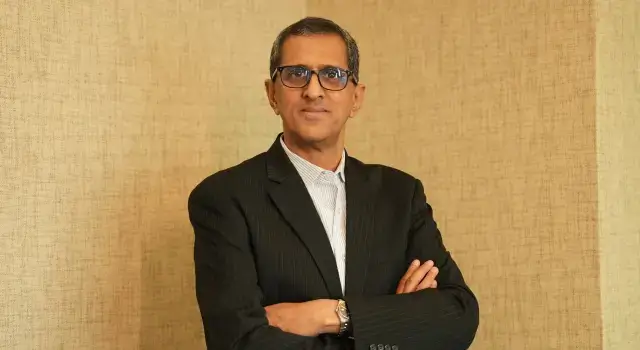
In the last part, Ashok Ramchandran, Director – Group HR at Aditya Birla Group, shares why building future leaders is the most important role of leadership. He explains how “future fitness” is at the core of the Group’s people strategy, where high-potential talent is given faster responsibilities to experience the joy of long-term growth within the organization.
00:00 – Organizational design and succession readiness
Ashok Ramchandran: I would push the fast forward to now. So the role of the manager in empowering and grooming the next generation is going to be important. We've explored how employees’ expectations are evolving. I mean now let's talk about the bigger picture if I can call it that. How is the Aditya Birla group preparing to stay future fit, you know, in this shifting landscape to say the least, given the patterns in the group of growth, change which is constantly happening.
As we herald in the next three years of growth, we came together as an HR team, as a leadership team, to think about what is future fit — exactly to your point, Brian. I think it comes at a slight one macro level point: is the organization designed to be future fit? Are we responding to the changes in the environment fast enough? So from a design point of view, it was a very critical point we have nailed down as something we need to review.
01:27 – Talent pipeline and culture-performance balance
Second is this whole area of succession readiness across levels. Do I have the talent depth and the pipeline of talent to be future fit? And in this second statement is hidden a huge word for all of us as employees — called opportunities. I think the future of the group, given our growth plans and the passion for high-end delivery now across our sectors and businesses that we operate in, is going to spawn into tremendous opportunities for generations ahead.
So my times and beyond my times, there are going to be fantastic opportunities for the next generation to build steady careers. And building that pipeline is a leadership duty. Making sure that pipelines of talent are scaffolding this company's future — that fantastic people get great careers faster — is part of the future fitness that we are driving.
A third angle we are driving in terms of future fitness — I love our concept of ABG Cares. We are a very caring company. We are a good company. Culturally we are very warm company. I think it must go hand in hand as another part of the coin — another side of the coin — in the form of sharper result orientation and holding meritocracy sharply to the ground.
02:52 – Meritocracy and future-fit strategies
I say this not because it's a criticism. It is an area we need to do more of — to make sure the high performing people, high potential people get faster responsibilities and therefore they see the joy of staying and building. In some corners possibly we are taking the mid path which may not be future fit. So doing the right thing in terms of meritocracy — making sure the correct people get the right opportunities fast — is part of their future fitness strategy.
And needless to say we are well-endowed in terms of learning capability. We have our group learning infrastructure in Gnanodaya and Navi Mumbai. All our businesses are well invested. Our CHRO and business leaders are very passionate about learning and capability building. I think that's a pride I carry. Helping you build to your aspiration is part of future fitness.
04:02 – Ease of working and performance accountability
You and your team at human resources have developed a three-year strategy. So there is something future fit about that strategy as it is emerging. It also pivots a lot on what is called three aspects, I would put it:
One — employee experience. You must have a great experience. Whether you are a fresher or people with experience, you must see the joy of your experience being vibrant in this company. I think we do that. But there could be corners that we need to make more consistent. So — employee experience.
Second pivot, I would say to the HR strategy, is what is called ease of working. Can I reduce the level of pain that you have to do in your role? Is there bureaucratic situations that I need to correct? Can I help you work faster, better, and through that, you feel more successful? So ease of working is a subject we need to focus on.
Part of that is collaboration between corporate functions and line functions in the business across the group, etc. I think coming together will pivot on ease of working.
Third big pivot, as I see emerging, is accountability. We're going to hold accountability to the ground a little sharper. What does it mean? We've coined a word called "performance with an edge." We want to celebrate high performers quickly, and that's the edge — to say I won't just treat you as normal, I'll treat you well, better.
05:14 – Learning and development investment
If I'm a non-performer, consistent non-performer, I've lost my attitude, discipline is missing — something must also happen to me. Shying away from holding me accountable is not right also. So we can't just take the high moral ground of doing the right things for the right people. We've got to also do the downside in a smart manner.
And I think these three are my pivots that will determine where we go on the larger strategy. But these three pivots are to be practiced by all of us as employees.
One of the things that I'm called upon repeatedly by other companies, forums, panel discussions to speak about is the depth of learning and capability that we've built. Starting from Gnanodaya that the group has invested over now decades to where we are today — across every business practicing deep learning curriculums, not just physical training, e-learning curriculums.
We are one of the most well-invested corporates on learning and capability building. So I think that's straight away a big win for the group.
06:32 – Active learning and rotational experiences
What I want all of us to do as employees is to please draw from this huge well that has been created for all of us. If you don't draw on the well, the water won't jump up and come to you. You need to draw from the well as much as somebody will put you into the well to drink. So please join the learning brigade, if I may call it that.
Second, I'm very proud of the kind of experiences we give people. Experiences to make sure the fabric of One ABG is used to give you different roles, different opportunities to succeed. So you don't have to grow only in one company in a particular role. You could do multiple things. And I think your willingness to explore opportunities is the fabric of learning — is the fabric of doing more. And I think that is something we do well.
Third, we have a lot of what I call as properties to experience. So manufacturing colleagues have Reprism as a property to experience. We have multiple properties of case study competitions, involvement where youngsters are pulled in to showcase their expertise. Seniors are showcased to make them tutors and trainers in Gnanodaya.
07:48 – Speed in decision-making and motivation
There is so many things happening around. You just have to log in and be part of. So I would say it's a fabric of experiences rather than only one property that I'm proud of. The pinnacle of experiences in many way is the Aditya Awards. A lot of people have aspirations to win part of the Aditya group awards and so on. But that's a recognition as much as this is a fabric of what you experience.
Brian, five years from now a lot of things would have changed. We need to think of that five-year change now. What will get us there is the velocity of what we do — in terms of decision-making, empowerment, and moving faster on many of our decisions that take enormous time and energy facilitating.
So it's a fabric of decision-making that are experienced by our business teams. If that is speeded up, I think it'll energize, it'll release discretionary effort. If there's one thing that I would like to change, it is the velocity and the speed of decision-making.
09:11 – Managerial role in future fitness
And I'm not talking about the big decisions of opening a new business and so on. I'm talking about the fabric of normal employee experience. I think that will make a big difference to me as I see it.
Future fitness for me comes not just from the velocity of decision-making that our people across our fabric are seeking, and hence it'll help unleash a lot of energy and efforts. It also comes from a second big factor, since you said five years — future fitness — it will come from the role of the manager in preparing their teams and letting them do their best.
So the role of the manager in empowering and grooming the next generation is going to be important. If you don't get that right, the next generation will hold us accountable for it. And we must do that. And there cannot be any delays in doing that. We must start that now to be future fit five years from now.
Host (Brian): Well, yet another really interesting conversation with none less than Ashok Ramchandran, our Director HR at the Aditya Birla Group. Of course, we value your opinion as well. I say this to all of you — soaking this in — please let us know your reactions and your comments in the section below.
And with that, we come to the end of yet another really interesting episode of Leadcast. Thank you.
Watch Full Video on Youtube: Leadcast | Leadership Blueprint and the Future of Work | Ashok Ramchandran | Part 3