

















Aditya Birla Renewables: Powering Group’s Clean Energy Vision
- Copy

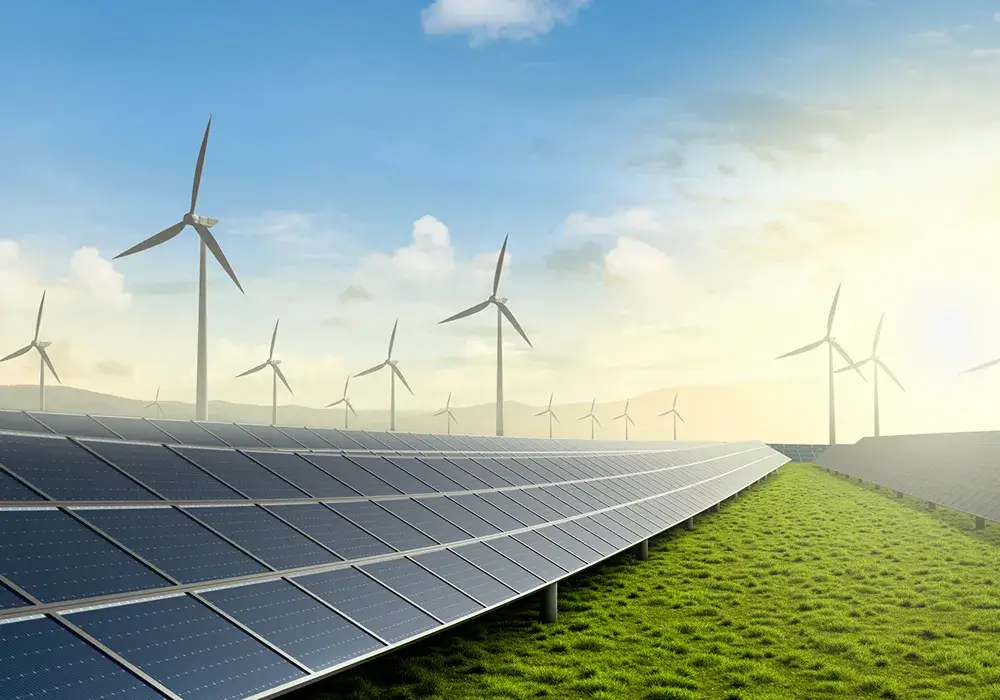
Aditya Birla Renewables is arming the Group’s clean-energy arm while also aiding the national renewable mission. Its growth reflects a larger shift in India’s energy market, from adding renewable capacity to supplying cleaner power with greater scale, flexibility and reliability.
ABRen has been on expansion mode in the recent years. Its wider portfolio, including operating and under-construction projects, stood at approximately 4.3GWp across ten states on 31 March 2026. This energy mix spans solar, wind-solar hybrids, floating solar and round-the-clock renewable-power projects.
ABRen’s captive foundation should not be confused with captive ambition. In the last two years, the company has confidently shared that it’s eyeing to build a portfolio of more than 10GWp over the next few years.
On 13 July 2026, ABRen signed a definitive agreement to acquire 100% equity shares and securities of Solenergi Power Private Limited, which owns the Sprng Energy group of companies, from Shell Overseas Investment B.V., a wholly owned subsidiary of Shell PLC. This transaction adds a contracted portfolio of ~5 GWp capacity (~3.3 GWp of operational capacity and ~1.7 GWp of under construction capacity) along with a strong connectivity and development pipeline to ABRen. Post the deal, the combined portfolio of 9.3 GWp will position Aditya Birla Group’s renewables business as one of the largest players in the sector.
The numbers matter because they mark a change in the character of the business. ABRen’s increasingly diverse portfolio puts its intended market well beyond the boundaries of its parent group.
Renewable-energy developers generally spend considerable time searching for credible, long-term buyers. Aditya Birla Renewables starts with something many competitors must build: a close relationship with one of India’s largest industrial groups.
Around 40% of ABRen’s installed capacity currently serves Group’s businesses across these sectors. This creates a natural base of industrial demand, supports long-term contracting and provides ABRen with an unusually detailed understanding of what large manufacturers require from their electricity suppliers.
Strategically, it’s a win-win. The Group’s businesses gain access to cleaner power and greater visibility over their energy costs. The renewables company gains credible anchor customers and revenue visibility as it expands into a wider market.
India’s energy sprint
Juxtapose this with India’s energy transition. It is often misread to be a story of substitution. Peel the layers and you realise it is actually a story of expansion.
In line with Indian government’s announcement at COP26, the Ministry of New and Renewable Energy is working towards achieving 500 GW of installed electricity capacity from non-fossil sources by 2030. By July 2026, the Ministry had already announced that India stands 3rd globally in renewable energy in terms of installed capacity.
India is progressively trying to reduce the carbon intensity of its power system while supplying considerably more electricity to factories, cities, transport networks, data centres and emerging industries through non-fossil fuel energy. However, this requirement for energy is a steep climb.
Factor this: the Central Electricity Authority expects peak demand to reach 459GW by 2035-36, with total electricity requirements growing at 6.41% a year between 2024-25 and 2035-36. Meeting that demand could require 1,121GW of installed capacity, including 509GW of solar, 155GW of wind and 174GW of energy storage.
According to the published data by the Ministry of New and Renewable Energy, India crossed the 150 GW milestone with cumulative installed solar capacity of 150.26 GW as on 31 March 2026. During the same period, cumulative installed wind power capacity crossed 56 GW positioning India, placing India at 4th rank in terms of Global Installed Wind Turbine Capacity.
The gap between the demand and the current capacity cannot be serviced by PSUs alone. This combination of growth and decarbonisation is creating space for a new generation of energy businesses and Aditya Birla Renewables (ABRen) is positioning itself firmly among them.
From ‘Renewable’ to ‘Reliable’ Power
India’s first renewables boom was largely a race to build solar capacity at declining tariffs. Its next phase will be defined by a more demanding question: how can clean electricity be supplied when customers actually need it?
Solar plants produce most heavily during daylight hours. Industrial facilities, urban infrastructure and data centres operate for much longer. As renewable penetration rises, customers will increasingly value power that is firm, predictable and available beyond the hours of peak sunshine.
The CEA estimates that India may require 80GW of battery storage and 94GW of pumped-storage capacity by 2035-36. That requirement signals a broader change in the market. The product of the future will not simply be a low-cost renewable electron. It will be a carefully assembled combination of generation, storage, grid access and contractual reliability.
Aditya Birla Renewables is adapting its portfolio accordingly. Alongside solar, it is expanding into wind-solar hybrids, floating solar and round-the-clock renewable projects.
That diversification has several advantages. Wind can complement daytime solar generation. Hybrid plants can make more effective use of transmission infrastructure. Storage and round-the-clock configurations can allow the company to offer customers power that more closely resembles conventional baseload supply, while retaining a substantially lower carbon footprint.
For industrial customers, this distinction is crucial as their priority is shifting from purchasing green power to obtaining dependable green power without compromising production, cost competitiveness or operational continuity.
Turning pipeline into operating scale
Renewable power is capital-intensive. Projects require substantial investment before the first unit of electricity is generated, making access to patient and competitively priced capital a central source of advantage.
In December 2025, Global Infrastructure Partners, part of BlackRock, committed ₹2,000 crore to Aditya Birla Renewables, with an option to invest a further ₹1,000 crore. The transaction valued the business at an enterprise value of approximately ₹14,600 crore and represented one of India’s largest primary minority investments in a renewables platform.
The significance of the transaction extends beyond its size. It introduces a global infrastructure investor with experience in owning and operating complex energy assets. It also provides external validation of the ABRen’s strategy, portfolio and growth prospects.
From customer’s perspective, ABRen now combines three forms of backing: an industrial parent with substantial energy demand, a global infrastructure investor with long-term capital and an expanding base of contracted projects.
Ready for Next Phase of Growth
Renewable energy is moving from the margins of corporate sustainability programmes to the centre of industrial strategy. And ABRen’s new ambition to exceed 20GWp post the acquisition of Sprng Energy is substantial but not improbable.
Along with broader geographical footprint, ABRen’s 60+ operating projects across ten states already reduces its dependence on any single resource region or market. The task at hand, therefore, is of commissioning projects predictably, standardising operations across a growing fleet and turning a development pipeline into recurring cash generation.
These are familiar territory for Aditya Birla Group. Its history lies in building and operating large industrial assets over long periods. Applying that discipline to renewable infrastructure could prove as important as access to capital or technology.
 Written by SERA