

















Painting a brighter future
- Copy

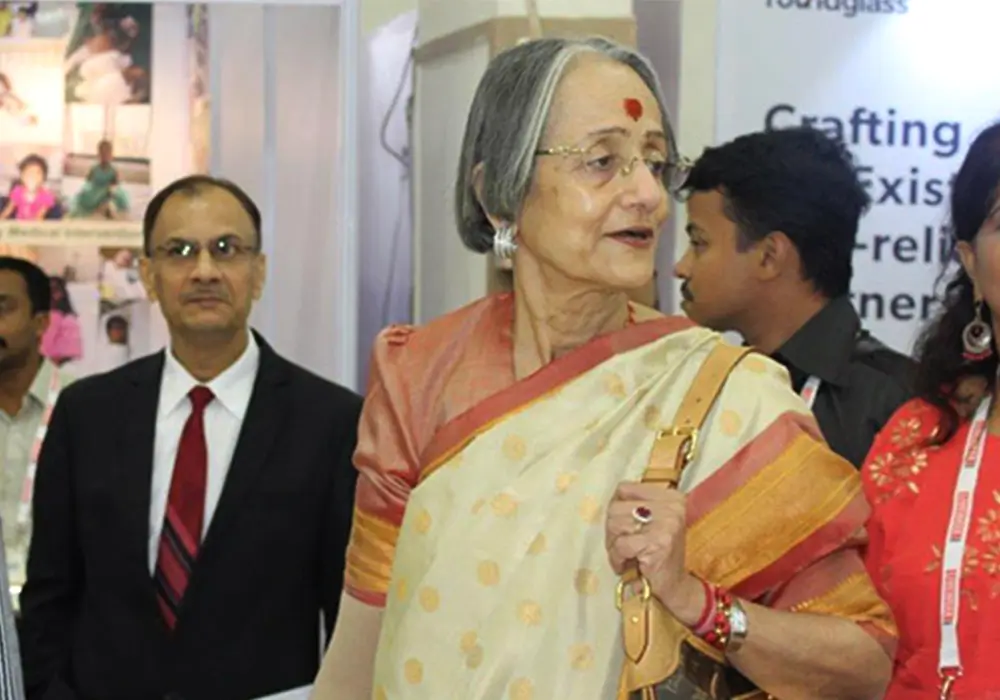
By Dr. Pragnya Ram
Group Executive President
Corporate Communications
The context
India, our nation, is a land of paradoxes. Here you can see extremities, far beyond one''s imagination. So it is not uncommon to find millions of children out of school, even though we have made our mark on the intellectual map of the world. It is not uncommon to see children stretching their palms. It is not uncommon to have little boys and girls at traffic signals, selling newspapers, magazines, a string of flowers, or shine shoes at curbs.
Delve a little deeper into their lives, and one will discover that most of them are destitute. Having migrated from the villages, they try to eke out a living from the streets and make the pavement their home. This has been a recurrent story since ages and continues today as well.
The genesis of The Aditya Birla Centre for the Welfare of Children
In the early 1970, seized of this concern, Mr. Shankar Rao Chavan, then Chief Minister of Maharashtra, parleyed with Mr. Aditya Vikram Birla.
For him, Mr. Birla was a humanitarian par excellence. A visionary, he could be depended upon to help the chief minister mitigate this issue of destitute children taking to begging for alms.
The chief minister had a lofty vision of abolishing begging in Bombay (now Mumbai) and parts of Maharashtra. For destitute children, for juveniles to be looked after, a rehabilitation centre seemed an imperative.
Together, Mr. Aditya Birla and Mr. Chavan blue-printed a strategy of building a home for children. But this home needed to bring a new meaning to the lives of these unfortunate kids. Their goal was that these children should never return to the streets. They should never be reduced to begging. They should become self-reliant. To do so, they would be trained in a vocation that best suited their aptitude. A vocation that would help them secure employment and get on with life as responsible working citizens.
Based on this ideology, Mr. Aditya Birla backed by the government, spawned ''Mangal Mandir'', a new abode for destitute children, in 1979.
Twenty-five years down the line, in 2003, Mangal Mandir was rechristened as ''The Aditya Birla Centre for the Welfare of Children'', in homage and as a tribute to its founder.
The centre and its management
The centre is housed on an acre of land, ringed with greenery in a quiet locale in Chembur, a suburb of Mumbai.
Making a small beginning in 1979, with just 50 orphaned and destitute children, today the centre is home to 250 children. In a caring and nurturing environment, they are looked after and trained. They are sent to the Industrial Training Institute (ITI) where they learn a skill. The training period normally extends to three years. Boys enter as 14 or 15 year olds, and leave after attaining their certificate. However, if they are unable to complete their training even as they turn 18, they are given a year''s extension.
Every endeavour is made to get a placement for the boys who have qualified. Regardless, as they master a skill, they are well equipped to earn their livelihood.
Led by a committed team of trustees, with Mrs. Rajashree Birla as the Chairperson, the centre''s activities are conducted under the aegis of the Anand Ashram Trust. An administrative staff runs its day-to-day affairs. A superintendent, a supervisor and an assistant, supported by utilities personnel, form this team.
The admission process
The centre is open to destitute boys between the ages of 14 to 17 years. As far as possible, they should have passed the tenth standard examination. A child is reckoned as a destitute child if he is:
- homeless, or orphaned, or abandoned
- not looked after by his parents who may be extremely poverty-struck, or suffer from an illness, or are mentally challenged
- exploited and made to work by his parents to generate income or made to beg. In either case, his full potential is thwarted
a single-parent child and the income of the parent is under Rs.500 per month - comes with a recommendation from the principal / headmaster of an educational institute in the village, provided the boy is a destitute
The process of s;election is fairly simple. We partner with the Maharashtra Government''s Department of Women and Child Development. They compile the list of eligible boys based on the inputs received from NGOs and the government-run remand homes, from all over Maharashtra. It is from this list, that the boys are s;elected for admission to the home.
The ways we nurture the boys
At the centre, which is now home for the boys, they live in multi-storied complex. There are three large dormitories with bunker beds that have storage space.
A spacious common room doubles up as a recreation cum assembly hall. It also serves as a dining room.
The day begins with a short prayer and breakfast. A nutritious packed lunch is given to the children as they leave for their vocational training school. Normally, the boys return after sundown. Dinner is served between 8 p.m. to 10.30 p.m. so as to cater to children who arrive late as well.
At the home, every need of the boys is looked after. They are given clothes, shoes and books. Wherever necessary, for their specialised training, they are supplied with special clothes and shoes, as required by the training institute at which they are registered.
Some of the children, who show an aptitude for studying, are also sent to pursue a degree course at a college. Often the education of these boys is sponsored by charitable institutions and philanthropists.
Apart from food and shelter, making sure that the boys are in good health is also a priority at the centre. To ensure this, medical camps are organised every month at the centre. A team of doctors and paramedics attend to the boys. Every boy undergoes a complete health check-up. As the children come to the centre from the under-served communities, some have skin, ENT and other infections. These children who suffer ailments are treated and their cases followed through till they are completely cured.
Celebrations unleash their creativity
Every function of national significance and every festival are celebrated. Among these are: Republic Day, Independence Day, Gandhi Jayanti, Ambedkar Jayanti, festivals such as Diwali, Gudi Padwa, Makar Sankrati, Raksha Bandhan, Dassera, Ganesh Chathurti and similar occasions are celebrated with a sense of rejoicing and bonding.
These celebrations are an excellent outlet for the children to show their creativity. The children put up an impressive performance within the framework of a cultural programme. Songs, dances and plays add a lot of gaiety. They also show up the talent that is resident among these boys.
To inspire the children and to set before them role models, we invite men and women of eminence. Famous personalities from different walks of life come and share their success stories, and the lessons they have learnt from the book of life.
Through these ways and through constant guidance, our teams endeavour to inculcate values among the children. Values such as honesty, respect for others, self-respect, perseverance, dignity of labour, discipline, compassion, simple living and positive thinking. In this manner, we help build their character.
Transforming lives
When a boy enters the portals of the Aditya Birla Centre for Welfare of Children, he is often diffident, indisciplined, insecure and unkempt. After spending three years at the centre, he emerges a transformed person. He is confident of standing on his feet. He knows he can make a living. All the bitterness that he nursed for the life that he had on the streets is gone. It is replaced by self-assuredness, and a sense of thanksgiving for the opportunity, which he was given to turn a new leaf.
From 1979 to date, we have managed to reach out to 2000 boys. Every year 200 boys are trained at our orphanage. What is most rewarding is that more than 95 per cent of these boys have found jobs or are involved in small enterprise start-ups. For all of them, the years spent at the centre have been indeed memorable and a great learning experience. Several of them are still in touch with us. We have made a beginning with this small step. We believe "a journey of a 1000 miles begins with a single step." A long road lies ahead.
In gratitude
For making a difference to the lives of these destitute boys and continuing to do so, we would like to express our deepest gratitude to industry leaders who have supported us, most prominent among them being Century Rayon''s top management team. Not only have they helped us financially, but they have always willingly taken on our boys for apprenticeship. A few of them have found openings in their factories as well.
We acknowledge the invaluable contribution and involvement of the state government of Maharashtra. For every child, the state government accords us a grant of Rs.500/-. Of course, the monthly expense for a single child, inclusive of his lodging, boarding, clothes, training and travelling expenses amounts to over Rs.1,600. This is met by our trust, from donations to our corpus funds and voluntary agencies who generously donate.
We would like to extend a special acknowledgement to all of the technical institutes who have helped us and continue to engage in training our boys. Among these are — Shrarnik Vidhyapeeth, Tuisi Technicals and the Children''s Aid Society''s ITI Units.
We are also very grateful to the After Care Association and several individual donors for their support both in cash and in kind.
We would heartily welcome your engagement with the centre, in whatever ways you can commit to the future of these destitute children.