

















Spinning a success story
- Copy

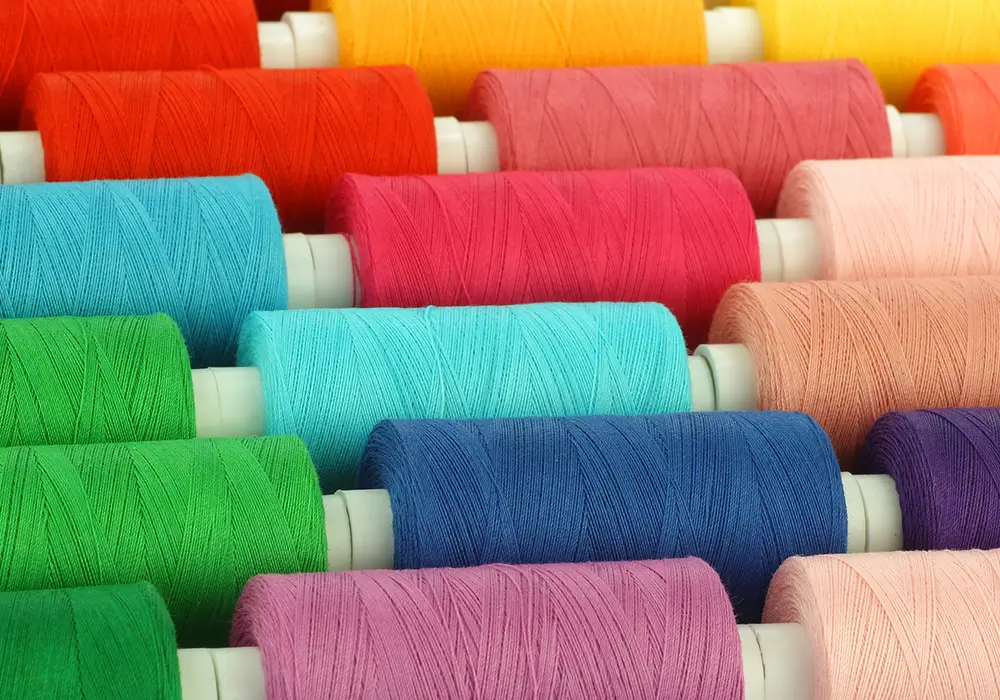
Jaya Shree Textiles met the challenges of stagnating growth and profits head on with a strategy that simultaneously c;reated an increased awareness of linen in the country, built a highly successful national brand and set global benchmarks in linen production
A leading producer of linen fabric and yarn in India, Jaya Shree Textiles has come a long way from its humble beginnings as a textile company in 1948 to a leader in the domestic linen market and one of the most preferred producers of wool globally. The company imports high-end linen fibres from France and Belgium and merino wool from Australia and is the third largest wool comber and independent spinner in the world. With a prestigious client list that comprises the who’s who of the fashion world, Jaya Shree Textiles takes the credit for being the first to introduce linen to India, way ahead of its time.
Here’s how Jaya Shree spun its success story:
Challenges: Making linen profitable
Despite being one of the leading producers of linen and wool tops in the country, the leadership felt a need to redefine their strategy and targets to take on new challenges. The ground reality was that the ready-to-wear market in India was outgrowing the ready-to-stitch market rapidly. Profit and growth figures had hit a plateau and the company needed a new business plan that would help it stay sustainable in the long run. The leadership devised a business strategy that encompassed the following parameters:
- Operational excellence
- Market reach
- Profitable growth
- Working capital reduction
With dogged determination and brilliant planning, Jaya Shree Textiles spun themselves an incredible success story.
The plan: Popularising linen
One of the biggest obstacles was the consumer’s perception of linen – the fabric was widely considered to be a dull and boring fabric, affordable only by the rich, needing high maintenance, and to be worn only in hot weather.
In an attempt to ramp up growth and profitability, the leadership at Jaya Shree Textiles formulated a three-pronged strategy:
- Creation of demand for linen yarn and fabrics in the domestic market
- Protect market share in linen yarn through supply chain management
- Excellence in working capital management
Creation of demand
Jaya Shree Textiles went all out to c;reate awareness and grow market demand for linen by advertising its properties, tying up with apparel brands and fashion gurus, etc. Launching its products under the umbrella brand Linen Club, the company used media, social media and fashion shows to project linen as a high-end natural lifestyle fabric and educated customers about the attributes of linen to dispel myths that surrounded the fabric. The company collaborated with various ready-to-wear national and domestic brands and increased its reach to make linen available to consumers across India. Fashion and film celebrities were roped in to spread the message that linen was both comfortable and all season. The perception barrier was broken and linen is now perceived as a fabric that is exclusive, distinct, colourful and 100 per cent natural.
Supply chain management
The success of the first phase of the transformation strategy saw increasing demand for linen in the domestic market. The increased demand threatened to outpace supply and this could have placed the company’s market share and leadership position in peril. The challenge was to protect its competitive edge and dominant position of 75 percent market share, by ensuring that the company could supply even when demand went up.
To counter this, Jaya Shree Textiles laid the foundation for capacity expansion and concurrently decided to augment in-house production by outsourcing from China. The team identified a group of spinners in China to source yarn after a detailed assessment of their capabilities and quality protocol. Through this strategy, the company protected its market share in the domestic market by outsourcing 60 percent of the total volume output from China.
Working capital management
The company then set out to achieve what was termed unachievable in the textile industry – break the working capital myth and achieve negative working capital. The company changed the payment paradigm from ‘Make and Sell’ to ‘Sell and Make’ and improved financial ratios by reducing lead time in linen yarn imports. The company also negotiated better payment terms with suppliers and channel partners and managed risk better by early collection of receivables.
Spinning a best-seller
The results have been astounding. Jaya Shree Textiles has grown at 20 percent, much faster than the textile industry CAGR of 9 percent, its EBITDA has doubled, as have its revenues. Most remarkable was the Return on Capital Employed (ROCE), which went up from 14 percent in FY10 to 77 percent in FY12. Net working capital actually fell from 26 percent in FY10 to a negative 4 percent in FY12!
Jaya Shree Textiles is striving to sustain its tremendous success by ensuring optimum utilisation of resources to remain cost-leaders. The company has in place a well-defined brand plan to establish Linen Club as a “Top of the Mind” brand, leveraging its high-level status and recognition in Indian and European trade circles.” At Jaya Shree Textiles, the vision is to keep its spindles spinning at top speed.