















The Aditya Birla Group - In perspective
- Copy

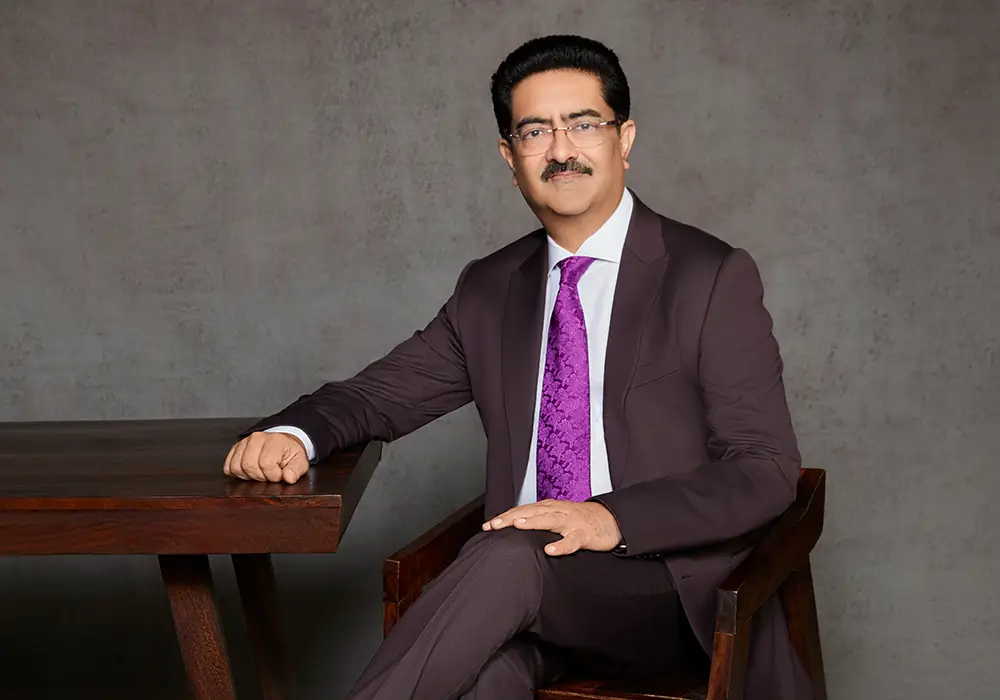
Mr Kumar Mangalam Birla on the direction the Group has taken in the last four years
I would like to take this opportunity to retrace the direction of our Group over the past four years. If one were to encapsulate it in a single word ; the dominant strategic theme over the past four years has been consolidation. This is in line with our vision of being a premium conglomerate, with a clear business focus at each business level, relentlessly pursuing value creation. The logic underpinning consolidation is the push for market leadership, economies of scale, productivity gains and operational efficiencies, coalescing to c;reate value-adding growth.
The major steps
Let us recount some of the major steps that we have taken in our drive towards consolidation:
- First, I believe the process of consolidation has been exemplified by our overseas units. The financial shock that hit the South East Asian countries in 1997 took until last year to fully wear off. Whilst several erstwhile corporate titans in the region have crumbled, our units, without exception, have not only emerged unscathed but stronger, and have continued to grow and excel. Let me remind you that our units overseas operate in a far more liberalised environment than we have in India, and duties on finished products are from nil to a maximum of five per cent. I believe that we can be truly proud of their achievements. In many ways, they hold a mirror to what the future economic scenario will be like in India, when duty differentials reduce to global levels.
- The acquisition of a 74.6 per cent equity stake in Indal from Alcan, at an investment of a little over Rs.1,000 crore, has been a milestone. Bringing Indal into the Group''s fold has helped us position ourselves along every link in the value-addition chain of the business, from metal to downstream products, where the Hindalco-Indal combine accounts for an over 70 per cent market share.
- Moving on to the other metal in the Group''s stable, it is commendable that Birla Copper has attained a leadership status ; commanding a market share of over 45 per cent ; within a short span of three years from its first commissioning. The de-bottlenecking of the copper smelter at Dahej last year has resulted in cost efficiently enhancing the smelter capacity by 50 per cent to 150,000 TPA last year, and the ramp-up achieved has truly set a new global benchmark. The acquisition of the Nifty mines in Australia from Straits (Nifty) Pty Ltd has elevated Birla Copper to an integrated copper producer.
- Yet another landmark restructuring move has been the decision to consolidate Indo-Gulf''s copper business with Hindalco. Simultaneously, Hindalco has made a second open offer for the shares of Indal. All these moves take us ahead on the road towards unifying the Group''s non-ferrous metals businesses, and transforming Hindalco into a globally competitive non-ferrous metals powerhouse.
- Post-restructuring, Indo-Gulf will emerge fully focused on fertilisers, with a brand that commands a huge equity, strong cash flows and a leadership position in the fertiliser industry. It is well positioned to take advantage of the opportunities that arise from the disinvestment programme of the government.
- The decision to de-merge the Insulator Division ; one of the Group''s best performing businesses ; and transfer it to a separate 50:50 joint venture with NGK of Japan, the leading global player in the business, is a crucial step to take the insulator business to new heights. The partnership with NGK will help to build upon and strengthen the leadership position we already enjoy in the domestic market, because of the access we will have to the latest in product and manufacturing technology. In addition, there will be opportunities for getting plugged into a global marketing network. Through this route we will take the insulator business to new heights.
- A slew of initiatives have also been taken to consolidate the operations of Grasim ; among them, the closure of the pulp and fibre plants at Mavoor and the sale of the loss-making fabric operations at Gwalior. Over the past three years, Grasim has become much leaner and stronger ; with the debt/equity ratio improving from 0.93 to 0.58, interest charges falling from Rs.292 crore to Rs.168 crore, operating profit rising from Rs.678 crore to Rs.1,142 crore, and workforce rationalisation taking the manpower strength from 24,400 to 16,600.
- In the Telecom business, we joined hands with the Tata Group. Beginning in two states, we have expanded to seven states - after having bid successfully for Delhi and Madhya Pradesh and acquiring the Chattisgarh circle. Our subscriber base has reached 1.1 million. Our footprint covers 40 per cent of the cellular market in India, with a 47 per cent market share in the circles where we operate and an 11 per cent market share nationally.
- We have divested the Group''s stake in MRPL to ONGC. Although the sale of the group companies'' equity stakes in MRPL will have a one-time impact on their profits, the exit from MRPL indicates our firm resolve to rationalise the Group''s portfolio of businesses with a view on the future, and also bears testimony of our commitment to a key group of stakeholders: our lenders.
The Birla Sun Life joint venture, which started off three years ago, has developed a major presence in the insurance and mutual funds'' sectors. Birla Sun Life is perceived as a leading quality market player recognised for its superior service levels, and we consider this as a core business with immense growth potential in the years ahead.
From all of this, a clear trend emerges. Our strategy dictates that we get out of businesses where we are bit players and strengthen the businesses where we have clear competencies, so that we get to the top of the league or consolidate our position there, as the case may be. This leads to a sharper and tighter business portfolio with our firepower being better targeted.
I do believe that our decision to consolidate — and the way we have gone about implementing it — has been sound. Firstly, we have operated our existing assets efficiently. As an example, I want to specifically mention our viscose staple fibre (VSF) business, from which I have learnt that with innovation and focused teamwork, a mature business can continue to grow. This 52-year-old business continues to better itself year after year, which says to me that truly, there is no end to improvement — it is limited only to the extent of our imagination.
Secondly, the assets we have built and acquired have been quality assets, complementing our existing strengths. Thirdly, the asset growth has been funded largely through internal accruals. As a result, every one of the companies in our Group has emerged with a stronger balance sheet. Fourthly, save for the IT and garments businesses, which are still at an incubation stage, the consolidation measures have started yielding the results that we had envisaged.
Performance measures
Having said this, what has it meant in terms of performance? Let''s just look at numbers and let me use two performance measures. First, as you are aware, we adopted Cash Value Added or CVA as a performance metric three years ago, which is in consonance with our Group''s focus on value addition. CVA, by itself, is a punishing measure in that it calls for superior returns on assets c;reated and equity invested. Our Group''s CVA has been positive. Given the stringent performance standards set by the CVA metric, and the fact that not too many companies in India have actually consistently delivered even a positive CVA, I believe that this is a commendable performance.
I must add that the market capitalisation of the Group correlates very weakly with the sharp increase in value addition, as measured by CVA during the same period. Even as I do not think we need to be drawn into the expectations game as fuelled by analysts, over a period of time, we hope that the market valuations will reflect our underlying strengths and performance.
Focus on people
I must add that the course of shrinking the business portfolio while placing larger bets in a few industries is a higher risk strategy, albeit with the promise of higher returns. Continuing to deliver superior performance whilst factoring in this potentially higher risk profile takes us to what I believe is our most important asset, one that is not reflected in any of our balance sheets — our people. Over the last several years, our focus as regards people has been, in a nutshell, to build a meritocracy. We have taken several initiatives which I would classify under three broad heads — learning and relearning, performance management and organisational renewal.
The most obvious outcome of our efforts on the people front is that our brand as an employer has enhanced significantly, enabling us ready access to some of the best minds and talent available in the country.
Second, our Organisational Health Survey (OHS), which is a well-regarded mode globally of tracking employee satisfaction, has thrown up very encouraging results this year, based on the tracking of 8,670 managers across the Group. While commendable work has been done at Gyanodaya — our internationally acclaimed centre of management learning — to accelerate the pace of learning, I believe that this is an opportune time to take the process to an even higher plane.
We are pushing even harder on the people front, building on the significant progress we have made so far, to press on with the task of building a meritocracy — not just of brainpower, but also of entrepreneurial power, dedication power, vision power, go-getter power and ambition power.
- Mr Kumar Mangalam Birla, Chairman, Aditya Birla Group