













Born in Odisha: The reshaping of India’s Aluminium future
- Copy

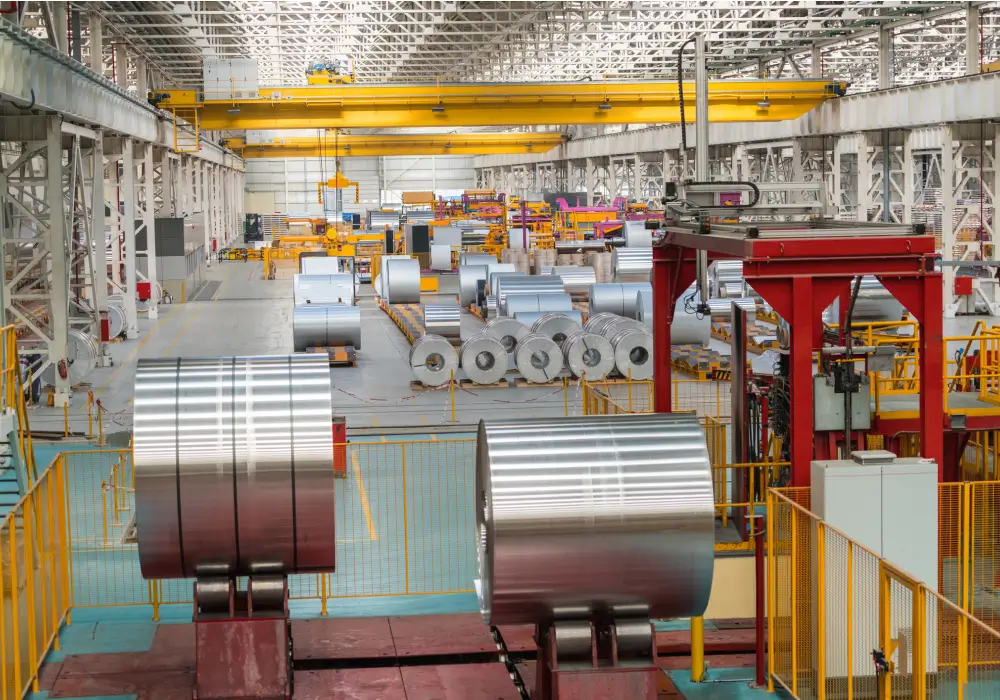
With new FRP, battery foil and smelter expansion projects underway in Odisha, Hindalco is strengthening India’s aluminium ecosystem, aligning Make in India with future demand from mobility, energy and advanced manufacturing.
Make in India is not an easy challenge. Manufacturing leadership today – especially in metals – depends not just on scale, but on depth of operations. Industries must build domestic capability across the value chain, reduce import dependence, and prepare to meet demand from emergent sectors such as electric mobility, energy storage, defence and advanced packaging.
For Hindalco, this has meant building the aluminium ecosystem from the ground up, to occupy its position as the world’s largest aluminium company (by revenue).
Recent milestones at its expansive Odisha operations reflect this direction. The commissioning of new flat rolled products and battery-grade foil facilities, alongside the flag-off of a major smelter expansion, mark a decisive step in strengthening India’s aluminium manufacturing base. These are not standalone events, but part of a longer-term strategy to build integrated, future-ready capacity.
Strengthening the Base: Smelter Expansion at Scale
Aluminium is a critical input for modern industry, and long-term manufacturing growth depends on assured availability of primary metal.
Hindalco’s ₹21,000 crore brownfield expansion at the Aditya Aluminium complex in Sambalpur will add 3.6 lakh tonnes per annum of smelting capacity, taking the facility closer to 0.72 million tonnes per annum. The expansion strengthens domestic metal availability while improving productivity, energy efficiency and operational resilience.
The project also integrates round-the-clock renewable power solutions, progressively lowering the carbon intensity of aluminium production. As sustainability becomes a core sourcing requirement across sectors, this shift is increasingly central to manufacturing competitiveness.
Moving Up the Value Chain: FRP and Battery Foil Commissioning
India continues to import a significant share of flat rolled aluminium required for packaging, automotive applications, electronics and batteries.
To address this gap, Hindalco has commissioned a ₹4,500 crore expansion of its flat rolled products and foil facilities in the Hirakud–Lapanga cluster in Odisha. FRP capacity will increase to 335,000 tonnes per annum and is expected to cut India’s flat rolled aluminium import dependence by nearly half.
Another unit being commissioned is India’s first battery-grade aluminium foil manufacturing facility. Designed to support up to 100 GWh of lithium-ion cell production, the plant strengthens domestic capability for electric mobility and energy storage, while reducing reliance on imported specialty materials.
Integration as Competitive Advantage
What differentiates this expansion is not capacity alone, but integration.
Hot metal flow from smelter to downstream units improves energy efficiency, consistency and quality control. Proximity between upstream and downstream operations enables tighter coordination, faster response to customer requirements and closer alignment between metal production and end-use applications.
This integrated model allows Hindalco to move decisively up the value chain, delivering value-added aluminium products that meet global benchmarks while remaining resilient to supply chain disruptions.
Odisha as the Manufacturing Anchor
Odisha sits at the centre of this strategy. Hindalco has invested over ₹30,700 crore in the state to date across mining, smelting and downstream manufacturing, with integrated operations that employ nearly 23,000 people.
The next phase of investments, including the current ₹37,000 crore expansion pipeline, is expected to generate over 15,000 additional direct and indirect jobs. The Hirakud smelter, one of India’s oldest aluminium facilities, continues to anchor upstream production, while Aditya Aluminium at Lapanga represents the next generation of smelting and downstream manufacturing.
Building for What Comes Next
Demand for aluminium will accelerate as India expands its EV ecosystem, strengthens its defence manufacturing base and modernises packaging and transport infrastructure. Meeting this demand will require integrated thinking, sustained investment and continuous capability building.
As India moves up the industrial value chain, aluminium made in India will increasingly need to be engineered for advanced applications, produced responsibly and delivered at scale. Hindalco’s integrated approach positions it to play a central role in that journey.