

















Energising Growth, Responsibly: A New Chapter for Grasim and Aditya Birla Group
- Copy

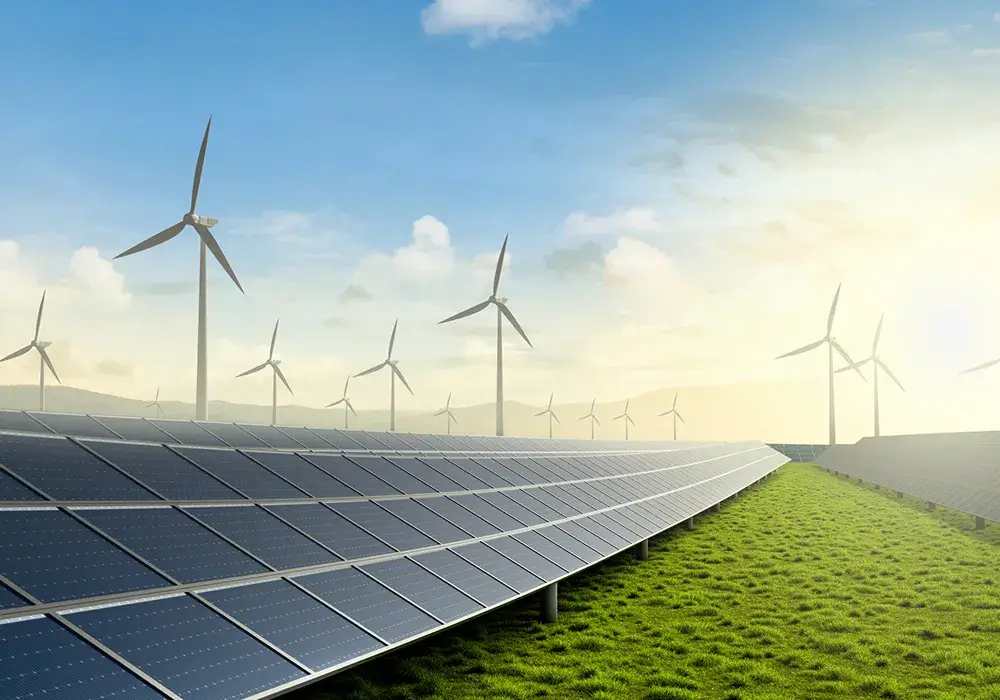
For decades, energy has been a silent enabler of industrial growth - essential, yet often treated as a variable cost to be managed. Today, that equation is changing. Across the world, the transition to cleaner energy is reshaping not just how businesses operate, but how they compete, grow, and create value.
At Aditya Birla Group, this shift is being embraced not as a constraint, but as an opportunity. And at the heart of this transformation is Grasim Industries—quietly, steadily reimagining what energy means for a modern, global enterprise.
It began with a simple realisation: energy can no longer remain an external dependency. In a world defined by climate commitments, volatile fuel markets, and rising stakeholder expectations, the cost of inaction is far greater than the cost of change.
The Group’s response has been deliberate. Instead of relying solely on conventional power or long-term purchase agreements, it has been enhancing its profile as an energy generator. In FY26, flagship company Grasim had, through its subsidiary Aditya Birla Renewables Ltd., built up a portfolio of ~4.3GW in clean energy.
This focus on energy continues. Through a series of carefully structured investments—often taking minority stakes in renewable energy projects—Grasim and other Aditya Birla Group companies are moving deeper into the energy sector.
Strategic Bets
These are not attention-grabbing, single-project bets. They are smaller, distributed investments across solar and hybrid assets, built in partnership with experienced developers. On their own, each project may appear modest. Together, they form something far more powerful: a growing network of clean energy assets that the Group can rely on, shape, and scale (see graphic below).
There is intent behind the structure. By holding strategic stakes in these projects, the Group secures long-term access to energy at predictable costs, while retaining the flexibility to expand. What was once a fluctuating expense began to look more like a controlled, strategic input—aligned with long-term business planning.
Responsible Outlook
But this is not only about cost or control. It is also about responsibility.
As industries such as cement, textiles, and chemicals navigate increasing scrutiny around carbon emissions, the expectations are clear. Customers want greener products. Investors are prioritising sustainability. Policymakers are accelerating the shift toward renewables, guided by global frameworks such as the Paris Agreement.
For Aditya Birla Group, integrating renewable energy into its operations is a direct response to today’s imperatives. It is a way to reduce carbon intensity at scale, to align with global benchmarks, and to ensure that growth does not come at the cost of environmental impact.
In this sense, sustainability is being woven into the fabric of the business itself.
A case in point is UltraTech’s investment in floating solar photovoltaic panels in two water reservoirs at its Awarpur Cement Works. With around 7,600 panels installed, the unit can generate up to 3.30 MW. It is expected to reduce about 6,000 MT of CO2 emission annually.
There’s another dimension to the project. The water reservoirs help in water conservation and store about 110, 000 cubic metres of water. Apart from generating solar energy, the panels will help reduce water loss due to evaporation. Thus, this initiative has multiple benefits – energy security, captive power generation, water harvesting and conservation and carbon emission reduction.
Cohesive Action
As these investments have grown, so has the ambition behind them.
What began as a series of project-level decisions is now evolving into a more cohesive vision, anchored by Aditya Birla Renewables. This platform brings together the Group’s renewable assets and aspirations under a single strategic umbrella—one that is designed not just to support internal demand, but to scale with it.
The recent Rs 3,000 crore investment commitment from BlackRock in Aditya Birla Renewables reflects the strength of this vision. It signals confidence—not only in the Group’s ability to execute, but in the long-term relevance of building integrated, platform-led energy capabilities.
In many ways, this marks a transition from participation to leadership in the energy space.
Yet, the impact of this shift extends beyond the boundaries of the organisation.
Each renewable project contributes to local economies—creating jobs, supporting infrastructure, and bringing cleaner energy into the grid. Clusters of such projects, particularly around industrial hubs, have the potential to reshape regional energy landscapes—making them more resilient, efficient, and sustainable.
For the country, it supports broader energy transition goals. And for the Group, it reinforces a long-standing belief: that business success and societal progress are deeply interconnected.
Through Grasim and its broader ecosystem, Aditya Birla Group is building up its energy capability step by step. Not through sweeping gestures, but through consistent, well-considered moves that add up to something transformational.
In a future where energy will define both opportunity and risk, this approach offers a clear advantage. Because those who shape their energy future will, in many ways, shape their own.
At a Glance: Recent Renewable Energy Investments
Grasim Industries
- ~29% stake in a solar SPV with GMR Group (Kalinga Solar Power )
- Acquisition of ~26% stakes in multiple renewable SPVs (₹69 crore aggregate investment )
- Investment in ~70 MW of renewable energy capacity across projects
- Captive solar power procurement from a ~10 MW plant in Odisha
UltraTech Cement (a Grasim subsidiary)
- ~26% stake in Sunsure Solarpark SPVs (multiple projects across states )
- 26% equity shares of AMPIN C&I Power Forty Four Private Limited, a company engaged in generation and transmission of renewable energy
- Distributed solar projects (~10–75 MW range) across Maharashtra, UP, Odisha