
















From Research to Reality: Bridging the Future With Industry-Academia Partnerships
- Copy

Innovation is created at the convergence of knowledge, ideas and capability. This is where collaboration with academia leads to tangible results.
Over the last few years, Aditya Birla Group’s metals flagship, Hindalco, has expanded its portfolio of high-value downstream products by delivering solutions engineered to customer demands such as lightweighting in electric mobility. However, these solutions required dedicated research and development efforts to innovate new alloys and manufacturing technologies.
The Edge of Science
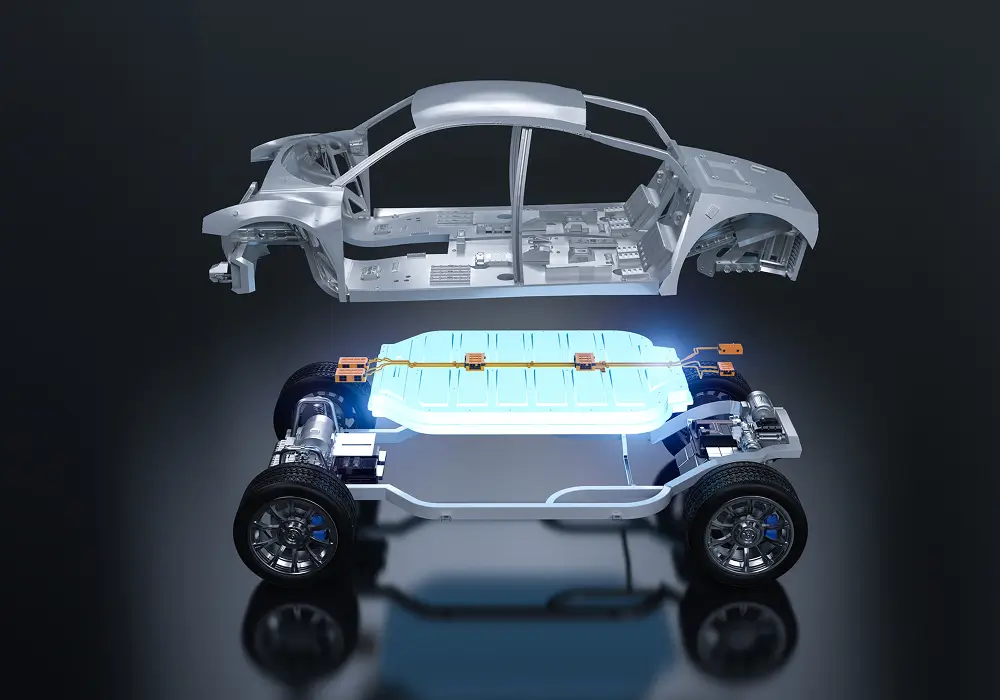
To accelerate this process, Hindalco chose the path of collaborative innovation through industry-academia partnerships. In FY2024-25, for instance, it combined IIT Madras’ scientific know-how with its own innovation centre’s capabilities to successfully produce light-weight, high-crash-resistant motor casings for electric vehicles (EV). The IIT Madras team led by Dr. Murugaiyan Amirthalingam, Associate Professor, Joining & Additive Manufacturing Laboratory, used additive manufacturing with conventional extrusion manufacturing to develop the casings.
“As Hindalco Innovation Centre works on developing new grades of alloys for crash applications in automotives, we use the facilities at IIT Madras to do thermomechanical simulations so that we can understand the behaviour of these alloys in the manufacturing process to design better extrusions,” states Gautam Wagle, Vice-President and Lead, Application Development, Hindalco Innovation Centre, in a recent Hindalco Mobility Innovation Series video.
Academic partnerships have larger benefits, too. Dr. Amirthalingam points out that by developing new materials, products and technologies, partnerships such as the Hindalco-IIT Madras one, are enabling Make-in-India.
Group-Wide Partnerships
Hindalco is not the only Aditya Birla Group company leveraging industry-academia partnerships to develop high-performance materials, adopt new technologies, and innovate low-carbon solutions for Net Zero sustainability. Group majors like UltraTech Cement, Birla Carbon and Grasim have long collaborated with educational institutions at home and abroad to stay abreast of the latest technologies to enhance competitiveness, even as they continue to advance in-house research.
The partnerships cover educational institutions in India and abroad such as Columbia University, the Indian Institute of Technology (IIT), Indian Institute of Science (IISc), Institute of Chemical Technology (ICT Mumbai), and Birla Institute of Technology and Science (BITS).
Future-Proofing Growth
Take carbon black leader, Birla Carbon. The company has partnered with Columbia University’s Columbia Electrochemical Energy Center (CEEC) to develop future product lines in carbon black and synthetic graphite materials. According to Ann Schoeb, Chief Research & Development Officer, Birla Carbon, while the company’s in-house research is largely led by customer demand, the CEEC partnership strengthens its future focus.
“If you’re not connected to longer-term research, the next disruption may leave you out of the market or behind the rest of the industry,” she stated in a Columbia Engineering Magazine article. The partnership has given Birla Carbon access to CEEC’s research in potential growth areas such as on the use of carbon-based materials in batteries.
Another successful partnership for Birla Carbon has been the collaboration with National Renewable Energy Laboratories in the US. The partners investigated a novel approach to synthesise carbon anode material from biomass pyrolysis oil for lithium ion batteries. Their study, which advances the circular carbon economy, was presented at an American Chemical Society Conference in August 2022.
Mutual Benefits
Industry-academia partnerships benefit both parties with researchers and students gaining funding as well as exposure to industrial-level challenges.
For instance, Birla Carbon expanded its 15-year-old partnership with Kennesaw State University (KSU) in Georgia, USA, to launch the Birla Carbon India Study Abroad Program in January 2026. The initiative will enable undergraduate students from KSU’s College of Science and Mathematics to undertake collaborative research projects at BITS Goa.
Birla Carbon has a state-of-the-art technology centre in Marietta, Georgia, where KSU has a campus. The company has funded undergraduate research initiatives for Birla Carbon Scholars at KSU since 2014.
Cutting Edge Expertise
The industry-academia partnerships at Aditya Birla Group cover a broad range of business areas. Hindalco’s collaborations, for instance, extend across its alumina, aluminium and copper businesses. In FY2025-26, it supported studies on the application of alumina in glass manufacturing processes at the CSIR-Central Glass and Ceramic Research Institute as it seeks to expand its footprint in specialised industrial applications. At BITS, Goa, it supported research on reducing arsenic, bismuth, and antimony levels in electrolytes and cathode products.
IIT Kharagpur is conducting controlled‑atmosphere pyrometallurgical experiments for Hindalco’s upstream business to evaluate alternative fluxes for the converting furnace in the Mitsubishi smelting process. Also under active development is a project with IIT Madras to develop aluminium nitride for advanced electronic and thermal management applications.
The company’s Birla Copper business has also allied with IIT Gandhinagar to support research in areas like energy efficiency, decarbonisation and emerging technologies. Birla Copper is a participant in the institute’s new Energy Research Cluster, a consortium-led platform that will address these challenges to drive sustainable industrial growth and development.
Climate Action Goals
Decarbonisation, in fact, is a key thrust area for innovation across companies in line with the Group’s larger sustainability goals. UltraTech Cement, which is the largest cement producer and supplier in the world (excluding China), is collaborating with IIT Madras and BITS, Goa, to develop indigenous carbon capture and utilisation (CCU) technology to decarbonise the hard-to-abate cement industry. CCU is globally regarded as a key technology for accelerating industrial decarbonisation.
The project was conferred on it by the Indian government’s Department of Science & Technology in 2025. The aim is to establish a 1 tonne-per-day carbon capture plant, integrated with an existing cement plant, as well as mineralisation and curing strategies to utilise the captured CO2. As industrial partner, UltraTech, which is contributing 25% of the total project cost, will help set up and run a prototype of one of its cement manufacturing plants for this. At scale, the project could help India achieve its Net Zero goals.
Carbon Neutrality Science
In October 2024, UltraTech entered a collaboration with the Institute of Carbon Management (ICM) at the University of California, Los Angeles, to pilot another new decarbonisation technology, the ICM’s groundbreaking Zero Carbon Lime (ZeroCAL).
ZeroCAL has the potential to eliminate nearly 98% of carbon dioxide emissions associated with limestone decomposition in cement manufacturing. ICM is building a demonstration plant at UltraTech’s integrated cement plant, which will make it the first company globally to implement the ZeroCAL process at scale.
“Partnerships like these, which place an emphasis on developing and deploying new and emerging technologies, will be a key enabler in our sector's efforts to accelerate decarbonisation and deliver carbon neutral concrete by 2050,” stated K C Jhanwar, managing director, UltraTech Cement, while announcing the initiative.
Next Gen Products
Meanwhile, Birla Cellulose’s collaboration with Stockholm University on pioneering research on beetle-damaged spruce wood has already achieved success. The research was triggered by the fact that climate change has led to increased outbreaks of bark beetle infestations in spruce trees, leading to forest degradation. The partners turned this environmental challenge into a sustainable solution when Birla Cellulose successfully produced Lyocell fibres using pulp derived from beetle-damaged spruce wood in FY2024-25.
Aditya Birla Group remains sharply focused on innovation as the engine of future growth, which will enable it to anticipate changing customer demands and tap new markets. Collaborative innovation through industry-academia partnerships is enabling Group companies to accelerate the adoption of next-generation technologies and development of new products and processes.